
Expert Drainage and Water Management for Horry County and Nearby Areas
Drainage issues show up across Horry County, Brunswick County, Georgetown, and the inland areas where clay soil holds water after every storm. New construction settles, low spots form, and runoff stops moving the way it should. We correct the grade and install drainage systems that get the water moving again.
How We Fix Drainage Issues Across the Grand Strand
Clay soil holds water longer than most yards can handle, and small grading issues make it worse. New builds settle, low spots form, and runoff stops moving. We review how the property drains, reshape the slope, and add drainage where it’s needed so the water flows the way it should.
Property Regrading
Your lot needs proper slope so water flows away from structures. We reshape the ground to create controlled runoff paths that work with clay soil conditions.
- Grade analysis to identify low spots and problem areas
- Reshaping ground to create 2-5% slope away from foundations
- Compaction that holds up in clay soil
- Surface drainage paths that move water to appropriate exit points
French Drain Installation
When your lot doesn’t have enough elevation for surface drainage, French drains carry water underground to appropriate drainage points. We install them where regrading alone won’t solve the problem.
- Perforated pipe systems buried in gravel trenches
- Strategic placement based on water flow patterns
- Proper depth and pitch for gravity-fed drainage
- Outlet points that direct water away from structures
New Construction Drainage
Rushed builds skip proper grading. We come in after construction and fix drainage problems that should’ve been handled before the foundation was poured.
- Correcting negative slope that sends water toward the house
- Addressing settling issues that create low spots
- Installing drainage where builders skipped it entirely
- Fixing foundation moisture problems from poor site work
Poorly Graded Lot Repair
Lots graded incorrectly from the start create standing water, soft spots, and foundation moisture. We correct the grade so your property drains the way it should have from day one.
- Identifying where the original grade failed
- Removing and replacing improperly compacted fill
- Establishing proper drainage slope throughout the lot
- Creating stable surfaces that don’t turn into mud pits
Why Drainage Fixes Fail in Horry County and Surrounding Areas?
If your yard keeps flooding, it’s time for a real plan. We’ll get you the solution.
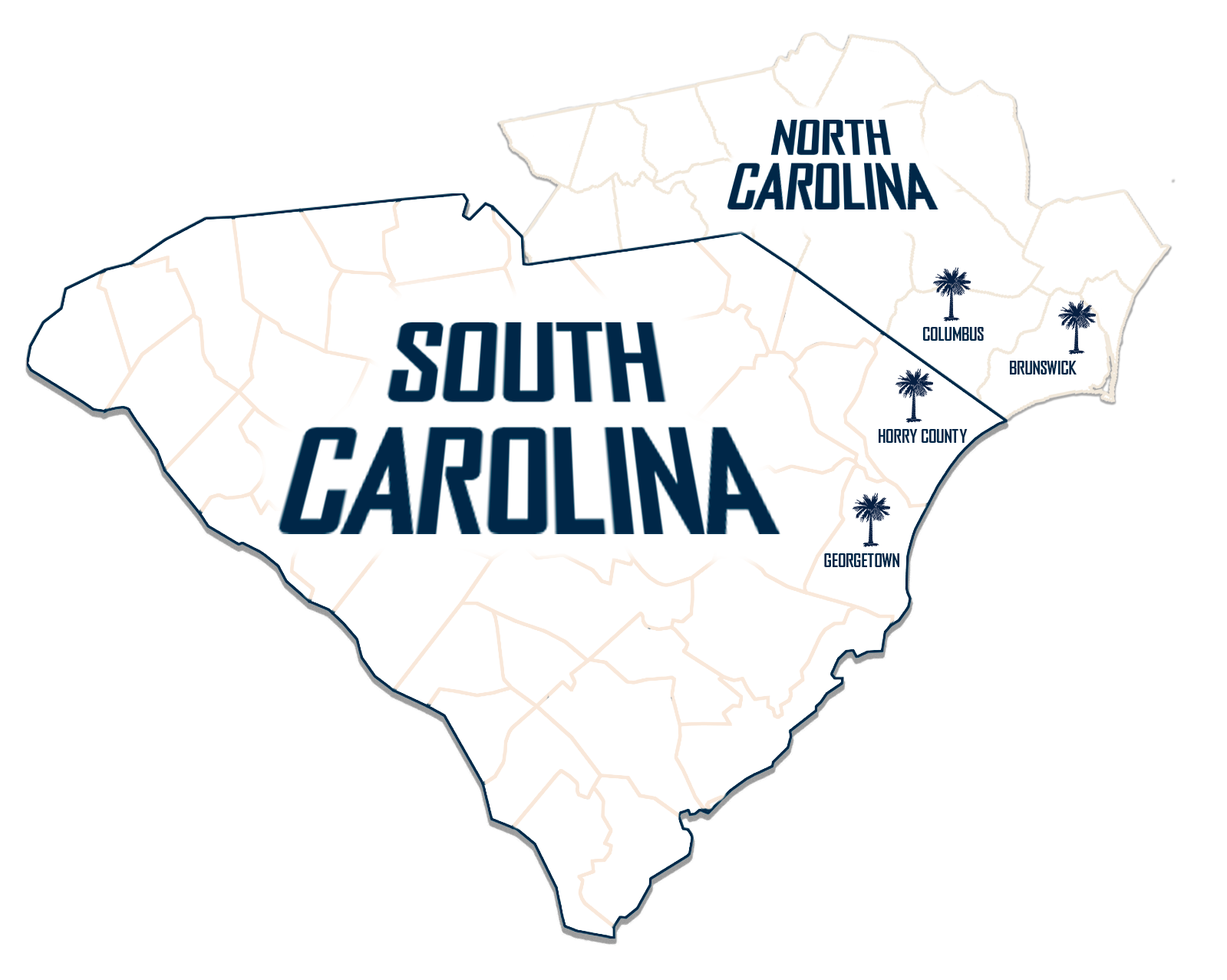
Serving Horry County and Surrounding Areas
Communities We Serve:
Horry County (SC)
Brunswick County (NC)
Georgetown County (SC)
Columbus County (NC)
What Property Owners in Horry County and the Grand Strand Are Saying


Common Questions About Drainage Solutions
Here are the questions we hear most from homeowners dealing with standing water across Horry County and nearby areas.
What should I do if my yard holds water after rain?
How do I know if my new construction lot needs regrading?
Why does clay soil make drainage harder?
How long does it take to fix a drainage problem?
Should I get a French drain or regrading for my drainage issues?
Get Your Drainage Problem Fixed
We’ll walk your property, show you what’s causing the drainage issue, and explain exactly how we’ll fix it. You’ll get a detailed estimate and a clear plan before any work starts.